
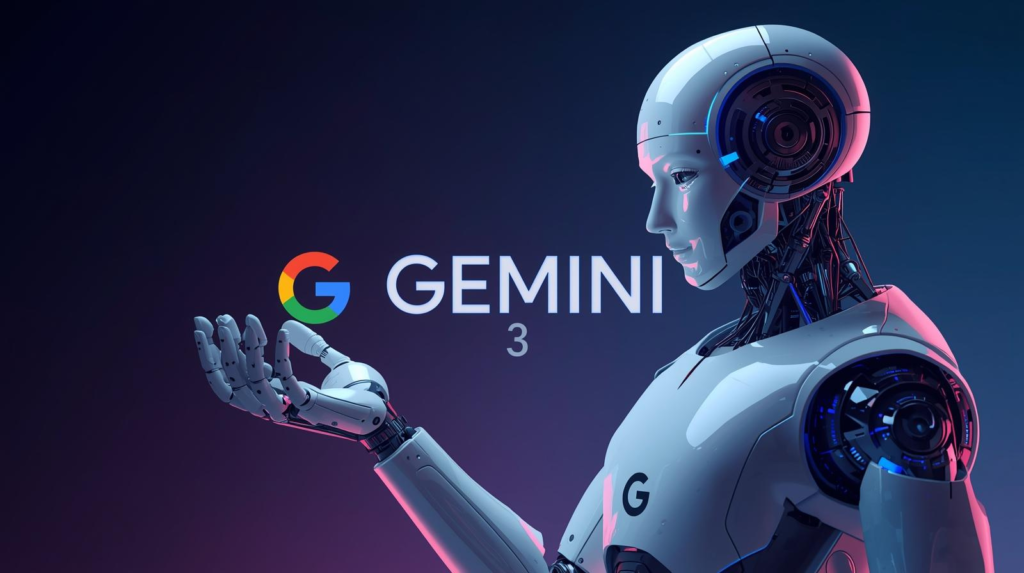
Introduction to Gemini 3: The New Frontier of AI
Artificial intelligence continues to shape the future of technology. Google has made a significant leap with the introduction of Gemini 3, its latest large language model (LLM). Gemini 3 enhances capabilities across a range of applications. This new AI model stands as a testament to Google’s commitment to being at the forefront of AI innovation. With profound advances in natural language processing (NLP) and machine learning, Gemini 3 aims to redefine how AI interacts with users and processes vast amounts of data.
Gemini 3 emerges as a crucial tool in meeting the growing demand for sophisticated AI solutions across various industries, including healthcare, finance, and education. This model utilizes deep learning techniques to provide enhanced understanding and generation of human-like text. It is an invaluable resource for businesses looking to implement AI tools that provide real-time insights and efficiency. Furthermore, companies can utilize Gemini 3 to stay competitive in a rapidly evolving landscape characterized by continuous AI breakthroughs.
Gemini 3 stands out for its strong performance and seamless integration with Google technologies. Users benefit from smoother workflows, automatic data syncing, and greater access to tools. This integration boosts productivity and supports faster innovation. As technology evolves, Google’s Gemini 3 showcases how generative AI can deliver tailored solutions and streamline user experiences.
AI trends are evolving quickly. Gemini 3 sets a new standard for competitors. Its advanced capabilities allow for a deeper understanding of user queries and create contextually relevant responses. This marks a major upgrade from its predecessors. As organizations compare AI models, Gemini 3 stands out as a strong candidate in the pursuit of artificial intelligence excellence.
Key Features of Gemini 3
Google’s Gemini 3 marks a significant advancement in the realm of artificial intelligence. Particularly, it stands out in natural language processing (NLP) and understanding. One of the main features of this model is its enhanced language processing capability, which enables it to comprehend context and nuances far better than its predecessors. This improvement is largely attributed to the integration of advanced machine learning techniques. They enhance the model’s ability to interact more naturally with users.
Another noteworthy feature is Gemini 3’s superior learning capabilities. Gemini 3 stands apart from traditional models. It uses deep learning and generative AI to deliver human-like text—fast. Its advanced architecture adapts quickly to any conversational style. This means users always get relevant, personalized answers. Gemini 3’s speed, flexibility, and tailored responses give it a clear edge over competitors like ChatGPT.
Furthermore, Gemini 3 introduces unique functionalities that set it apart. Its ability to integrate with other technologies, such as robotics and IoT devices, enables more complex interactions. It pushes the boundaries of what AI can achieve. This integration exemplifies Google’s commitment to advancing AI technology in practical, real-world applications. Regular updates from Google also ensure that users benefit from the latest AI innovations. They absorb
Unprecedented Capabilities: How Gemini 3 Outshines Competitors
Google’s Gemini 3 marks a big advance in AI. It processes information faster and understands human context better than earlier Gemini versions and many competitors. Its generative AI helps conversations feel smoother and more natural, setting a new standard for language models.
One of the most notable advancements of Gemini 3 over its rivals is its ability to comprehend and generate nuanced responses. This is largely attributed to the state-of-the-art deep learning techniques employed in its architecture. By leveraging a mix of pre-training and fine-tuning strategies, Gemini 3 achieves an impressive level of accuracy and coherence in its outputs. Therefore, it enhances user experience across various applications.
When comparing Gemini 3 to its main rivals, it becomes evident that Google’s revolutionary AI model excels in several areas. It handles complex queries more effectively. Its features allow it to tackle ambiguous language and multifaceted questions more effectively than other models. Furthermore, the robustness of Gemini 3 in adapting to emerging tech trends and updates yields a competitive edge, as it frequently undergoes improvements based on ongoing AI research.
Additionally, Gemini 3’s integration into Google’s suite of tools exemplifies how users can use AI technology to improve productivity and accessibility. By continuously analyzing user interactions and feedback, this innovative AI model positions itself as a reliable assistant capable of enhancing decision-making processes. The attention to evolving AI trends further ensures that it remains ahead of the competition. Gemini 3 has established itself as a leading resource in the AI-driven future.
Revolutionizing Language Processing with Gemini 3
The introduction of Gemini 3 marks a significant leap in the field of natural language processing (NLP). The model showcases advancements that push the boundaries of what artificial intelligence (AI) can achieve in terms of understanding and generating human language. This model employs sophisticated algorithms that integrate deep learning techniques. They particularly focus on enhancing human-computer interaction. As AI technology continues to evolve, Gemini 3 represents a key milestone in making AI systems more intuitive and responsive.
Gemini 3 is designed to harness the power of large language models (LLMs). It understands context but also generates coherent and contextually relevant responses. This capability is essential for various applications, from customer service automation to content creation. Gemini 3 has become an invaluable tool for developers looking to harness AI for diverse purposes. By employing cutting-edge generative AI techniques, this model can create text that mimics human-like understanding and nuances in conversation.
Moreover, the practical implications of the Gemini 3 model extend to a wide array of industries. Businesses can benefit from enhanced customer interaction through AI-powered chatbots that understand customer queries better than ever before. In addition, educators can utilize Gemini 3 to personalize learning experiences. Teachers can adjust content delivery based on individual student needs. The model’s continuous learning from interactions ensures that it stays up-to-date with emerging tech. Gemini evolves with changing language use over time.
This innovation not only reflects the latest trends in AI research but also positions Google as a leader in the AI comparison landscape. Gemini 3 stands out amid competitors, thanks to its ability to process language with remarkable efficiency and accuracy. As Google keeps improving its models, Gemini 3 will likely feel even more natural to use. And as that happens, it could change where AI is headed—and how smoothly it fits into the everyday tools we rely on.
Breakthrough Innovations in Machine Learning
The realm of machine learning has witnessed unprecedented advancements in recent years, with Google’s Gemini 3 standing as a testament to this evolution. At the core of Gemini 3 lies a sophisticated integration of cutting-edge algorithms that have pushed the boundaries of generative AI and large language models (LLMs). These breakthroughs have enabled the AI to perform complex tasks with remarkable efficiency and accuracy, fundamentally transforming the way we utilize artificial intelligence.
One of the notable innovations incorporated into Gemini 3 is the enhanced natural language processing (NLP) capabilities. By leveraging deep learning techniques, the model is adept at understanding and generating human-like text, making it a powerful tool for various applications. The advancements in machine learning algorithms drive the model’s ability to not only comprehend context but also engage in more meaningful and coherent dialogues. This capability significantly elevates the performance of Gemini 3 when compared to its predecessors and competitors.
An essential aspect of these innovations is the model’s adaptability to a myriad of languages and dialects, reinforcing its position as a go-to solution for global applications. Furthermore, the iterative learning process embedded in the AI design ensures that it continuously evolves, integrating the latest AI trends and findings from ongoing AI research. This results in a platform that not only remains at the forefront of technology but also provides users with a reliable resource for tech news and updates.
In summary, the breakthroughs in machine learning that power Google’s Gemini 3 are not just technical feats; they represent a significant leap towards the future of AI. By enhancing capabilities in NLP and deep learning, Gemini 3 offers unparalleled performance while setting new standards for generative AI platforms. As AI technology continues to advance, the impact of these innovations will undoubtedly shape the landscape of artificial intelligence and its applications across various industries.
Real-World Applications of Gemini 3
Google’s Gemini 3, a large language model (LLM) powered by advanced artificial intelligence techniques, has taken significant steps in various sectors. Its capabilities in natural language processing (NLP) and machine learning have changed the way industries operate.
In the healthcare sector, hospitals use Gemini 3 to help them predict analytics and patient diagnosis. By analyzing patient data and medical histories, the model can assist healthcare professionals in identifying potential health issues early. Thus, it can help doctors improve outcomes. For instance, a hospital implemented Gemini 3 to streamline triage processes, effectively reducing wait times and enhancing patient care quality. Furthermore, AI tools like Gemini 3 can aid in drug discovery. They can accelerate the process of bringing new treatments to the market.
In finance, Gemini 3 is being leveraged for risk assessment and financial forecasting. The AI’s ability to process vast amounts of data allows institutions to identify trends and make informed decisions based on predictive modelling. A prominent bank employed Gemini 3 to enhance its fraud detection systems, resulting in a significant decrease in fraudulent transactions. The integration of this AI innovation has enabled more accurate and timely responses to potential threats. Therefore, the bank could safeguard assets and maintain customer trust.
Customer service is another area where Google’s Gemini 3 is making waves. Companies are deploying this AI model to create virtual assistants capable of handling complex inquiries and providing personalized responses. By utilizing deep learning algorithms inherent in Gemini 3, businesses can enhance customer interaction quality, leading to improved satisfaction rates and operational efficiency. For example, a retail giant adopted Gemini 3-driven chatbots to manage customer queries. This action substantially reduced response times while also allowing human agents to focus on more complex issues.
The Future of AI: What Gemini 3 Means for Technological Advancement
As we delve into the intricacies of Google’s Gemini 3, it is imperative to understand the profound implications this new AI model holds for the future of artificial intelligence and technology at large. Gemini 3 represents a significant leap forward, integrating advanced natural language processing (NLP), machine learning, and deep learning capabilities. With its large language model (LLM), Gemini 3 is designed to enhance the interaction between humans and machines, setting a benchmark in generative AI technology.
The introduction of Gemini 3 is poised to influence a myriad of sectors, sparking innovation and reshaping the technology landscape. As this AI breakthrough showcases enhanced performance and versatility, tech analysts are predicting that it will catalyze the development of even more sophisticated AI tools. The model’s reliance on cutting-edge methodologies may also inspire subsequent models from competitors, prompting a healthy wave of AI research and development aimed at optimizing performance in diverse applications.
This advancement comes at a critical juncture, where the synergy between AI technologies and real-world applications continues to grow. Trends indicate that Gemini 3 will foster deeper integrations across various platforms, including business, education, and healthcare. The prospect of harnessing Gemini 3 for improved customer experiences, operational efficiencies, and innovative solutions indicates a future characterized by rapid technological evolution.
Ultimately, the significance of Gemini 3 extends beyond its immediate functionalities. It sets the stage for future comparisons among AI models, including Gemini vs competitors, thereby helping to shape best practices in AI technology. As we observe these developments unfold, it is clear that Gemini 3 is not merely a product of technological advancement; it embodies the potential to revolutionize our engagement with AI, reshaping our understanding of its capabilities and charting a course for the future of AI innovation.
Challenges and Opportunities in Implementing Gemini 3
The deployment of Google’s Gemini 3 marks a significant advancement in the realm of artificial intelligence and natural language processing (NLP). However, the introduction of this large language model (LLM) also presents a series of challenges that must be addressed to facilitate its effective utilization. One primary concern relates to ethical implications surrounding machine learning and AI, particularly in the context of generative AI capabilities. The potential for unintended bias in the AI’s outputs raises questions about the fairness and integrity of decisions based on its recommendations.
Moreover, privacy issues loom large in the conversations surrounding Gemini 3. As AI technology continues to advance, the handling of personal data must be approached with caution. Establishing robust privacy protocols is essential to ensure that sensitive information is not compromised during the operation of the model. Users and stakeholders must be assured that their data is managed responsibly, adhering to the best practices in data protection.
Additionally, there exists the challenge of public acceptance and trust in AI innovations like Gemini 3. Misunderstandings about the functionalities of artificial intelligence can foster skepticism among the public. To combat this, comprehensive educational initiatives are necessary to explain the capabilities and limitations of Gemini 3, demystifying its operations. Furthermore, incorporating transparency in how decisions are made can promote a better understanding and acceptance of AI outputs.
In addressing these challenges, collaboration amongst stakeholders, including developers, policymakers, and ethicists,s is vital. By engaging in open dialogues about the impact and implications of AI technologies, and by implementing guidelines that govern their responsible use, the opportunities presented by Gemini 3 can be fully realized. This model not only poses challenges but also holds the potential to drive AI innovation and set benchmarks for the future of AI applications in various domains.
Conclusion: Embracing the AI Revolution with Gemini 3
As we reflect on the advancements brought about by Google’s Gemini 3, it becomes evident that this large language model has the potential to profoundly influence the future of artificial intelligence. Gemini 3 represents a significant leap forward in generative AI, combining cutting-edge technologies in machine learning and deep learning to deliver remarkable capabilities in natural language processing (NLP). Its ability to engage in human-like conversations and generate coherent text marks it as a standout among its competitors.
The integration of Gemini 3 into various applications not only showcases the ongoing AI innovation but also highlights emerging tech trends that prioritize user experience. This new AI model aligns closely with Google’s vision of improved understanding and interaction between machines and humans. As AI tools become more sophisticated, users across the globe can harness the promising features of Gemini 3 to improve productivity, creativity, and overall communication.
Staying informed about the latest tech news and Google updates related to AI is crucial for understanding these developments. As we navigate through this AI breakthrough, it is important to regularly review AI comparisons, particularly between Gemini and its competitors, to appreciate their unique strengths and weaknesses. This ongoing quest for knowledge will enable individuals and organizations to leverage the full potential of AI technology. In summary, embracing the AI revolution with Gemini 3 is not merely about adaptation; it involves actively engaging with the advancements that shape our digital landscape and preparing for an era defined by transformative artificial intelligence.
Pingback: Junior Cyber Security Analyst 2025 Career Path