
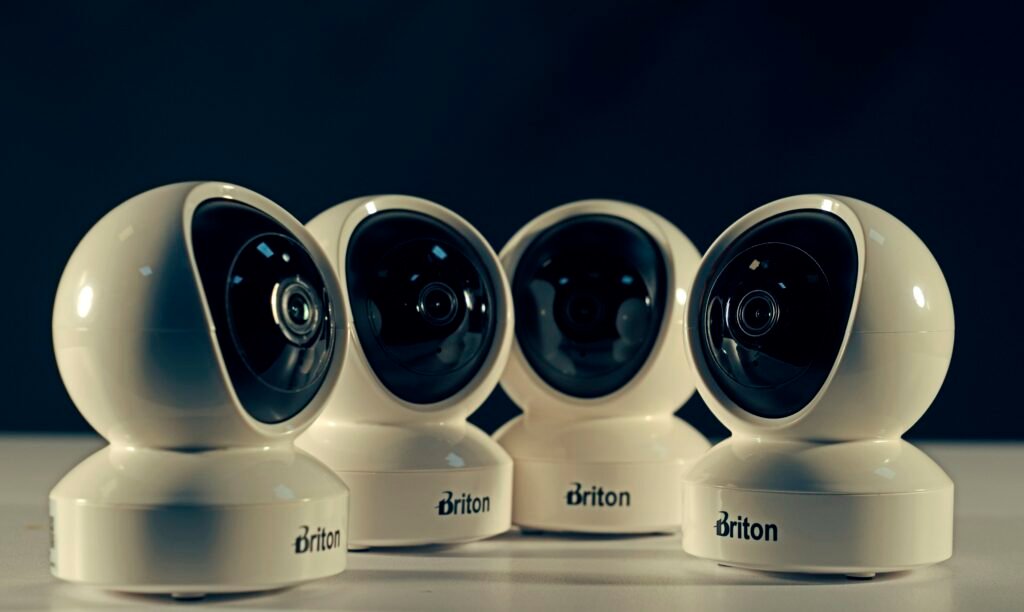
Introduction to AI in Home Security
The integration of artificial intelligence (AI) into home security systems represents a significant advancement in safeguarding residential spaces. As technology continues to evolve, security cameras are becoming increasingly sophisticated for everyday use. They rely heavily on AI capabilities rather than merely on hardware specifications. This shift is crucial because it enables security systems to deliver enhanced functionality and reliability, ultimately redefining the user experience.
In the realm of home security, the role of AI is pivotal. Traditional security cameras often rely on basic motion detection. This can lead to multiple false alarms triggered by non-threatening movements, such as swaying trees or passing cars. However, with AI technology, these security cameras can differentiate between actual threats and benign activity. For example, the best AI security camera for pet detection can accurately identify pets, reducing unnecessary alerts and improving overall effectiveness. This capability highlights the growing importance of intelligent systems in achieving optimal home security.
Furthermore, the concept of reverse engineering home security involves analyzing existing systems that can be improved with AI-driven enhancements. By focusing on intelligent algorithms, manufacturers can create security cameras that recognize faces. They can also operate without the need for subscriptions, thereby increasing user accessibility and convenience.
Prioritizing AI in security cameras has become essential. Today’s consumers seek solutions that provide not only high-definition image capture but also the ability to differentiate between people and objects reliably. Security cameras will continue to evolve and offer capabilities such as recognizing familiar faces and distinguishing between pets and humans. These capabilities will likely play a decisive role in the future of home security.
Concept of Reverse-Engineered Home Security
The concept of reverse engineering in home security emphasizes rethinking traditional methodologies that prioritize hardware over software capabilities. This approach advocates for starting with artificial intelligence (AI) algorithms, which are crucial in selecting effective security cameras. By integrating advanced AI capabilities right from the outset, homeowners can enhance their security systems significantly.
Traditional security cameras often relied heavily on hardware specifications, leaving many systems inefficient in accurately identifying real threats. With the evolution of AI, it becomes evident that the effectiveness of a security camera hinges not solely on its physical features but also on its intelligent processing capabilities. The best AI security camera systems in 2026 will utilize sophisticated algorithms to differentiate between various types of movements. They will distinguish people from animals and minimize false alarms triggered by swaying trees or passing cars.
Artificial intelligence enables security cameras to analyze motion patterns intelligently. As an example, a security camera with facial recognition that does not require a subscription can dramatically reduce false alarms by focusing on predefined parameters. Understanding the differences between person detection and standard motion detection is also crucial. It can determine how effectively a security system can distinguish between mundane movement and genuine threats.
The objective is to create a framework where security cameras can accurately identify incidents while minimizing unnecessary activations. Such capabilities are essential for homeowners. When considering the best smart camera for differentiating between cars and people or during nighttime scenarios, such as with driveway security cameras that can read license plates. By focusing on AI developments, homeowners can ensure that their security measures are both proactive and efficient.
Understanding Notification Fatigue and Its Impact
In today’s technology-driven society, security cameras are seen as a fundamental part of home security. However, the evolving capabilities of AI in these devices bring both benefits and challenges. One significant challenge that has emerged is notification fatigue, a psychological phenomenon that occurs when users become overwhelmed by excessive alerts. This happens because poorly designed AI systems lack refined object and person recognition.
The Implications of AI Home Security Cameras
Many AI security cameras, especially those from earlier generations, often send notifications for movements detected by low-level motion sensors. This can include anything from swaying branches of trees on a windy day to animals wandering across the yard. Such false alerts can lead users to disable notifications entirely or ignore them, rendering the security features of these cameras ineffective. In essence, the very purpose of having a surveillance system is compromised when the technology fails to distinguish between genuine threats and benign activity.
The implications of notification fatigue on home security are profound. Users may miss critical alerts in the event of a genuine security breach, simply because their trust in the system has been eroded. Thus, the need for smarter AI solutions becomes increasingly critical. In 2026, advancements in technology have led to the emergence of security cameras that utilize sophisticated algorithms, such as object classification and advanced person detection. These advancements work hand in hand to significantly reduce false alarms, providing users a more reliable home security experience.
This progress leads to better user engagement with their security systems, fostering an environment where alerts can be effectively managed. The latest models, such as those featuring facial recognition without subscription fees, promise to enhance situational awareness. Furthermore, cameras that can ignore swaying trees and accurately differentiate movement will not only alleviate notification fatigue but also improve overall security. As homeowners seek effective solutions, understanding and addressing notification fatigue will be essential for the future of home security.
Subscription Traps: The Cost of Smart AI
The rise of artificial intelligence (AI) in home security cameras has brought new capabilities but also new financial models, particularly subscription-based services. Many modern security cameras, including the best AI security camera for pet detection with no false alarms, implement cloud processing to leverage advanced features such as facial recognition and person detection. While this can enhance the functionality of security systems significantly, it often comes with monthly fees that can accumulate into a substantial expense over time.
One of the primary concerns with subscription services is the long-term cost associated with accessing essential features. For example, a security camera with facial recognition that does not require a subscription may appeal to consumers who are wary of ongoing fees. Conversely, those using services like Amazon’s Ring might find themselves locked into a cycle, needing to pay for continuous access to useful features, such as AI-enhanced notifications and real-time analytics.
Privacy is another significant consideration when discussing cloud-based AI in security cameras. Storing footage remotely can raise concerns about unauthorized access or data breaches. Homeowners are increasingly seeking solutions that provide better privacy protection, such as the safest local storage security cameras, which process data on-device instead of relying on cloud servers.
Fortunately, there is growing interest in security cameras that integrate on-device AI processing. These systems can offer the sophisticated functionalities common in subscription-based models while allowing users to maintain control over their data. For instance, the best smart camera for differentiating cars and people is now being developed with such technology, reducing reliance on third-party cloud services. Therefore, the balance between cloud convenience and privacy remains pivotal as we approach 2026, leading consumers to evaluate their choices carefully.
Privacy Concerns: Cloud vs. Edge AI
The advancement of AI in security cameras has prompted a significant debate surrounding privacy, particularly the choice between cloud-based and edge AI systems. Understanding how these two approaches impact user privacy is crucial for consumers seeking optimal home security solutions in 2026.
Cloud-based AI systems utilize remote servers to process data collected from security cameras. This approach offers powerful processing capabilities. This enhances features such as facial recognition and object detection, and allows for constant updates to the algorithms. However, such systems often raise privacy concerns, as data is transmitted over the internet and potentially accessible to various entities, including service providers and hackers. Additionally, depending on the service terms, users may face long-term data retention issues, which could compromise their privacy.
In contrast, edge AI systems process data locally on the device itself. This significantly limits the amount of personal information transmitted outside the user’s premises. It enhances privacy and reduces security risks associated with cloud storage. For instance, a security camera that ignores swaying trees 2026 can operate independently, relying on integrated AI algorithms without external data requests. Furthermore, these systems often experience reduced latency, providing real-time alerts without the lag that may affect cloud-dependent devices.
Nonetheless, edge AI cameras may come with limitations regarding performance and functionality compared to their cloud counterparts. They may lack advanced features like extensive data analytics and remote access capabilities. This can enhance the overall user experience. Therefore, users must weigh the benefits and drawbacks of both systems. Choosing between a security camera with facial recognition and no subscription or a local storage option often depends on individual priorities regarding privacy, security, and desired features.
Meet the AI Contenders: An Overview
As we look ahead to 2026, advancements in artificial intelligence are set to revolutionize the landscape of home security. Among the frontrunners in this domain are the Google Nest Cam, Eufycam 3, and Reolink Altas PT Ultra. Each of these devices brings a unique set of features designed to enhance security through advanced object and person recognition capabilities.
The Google Nest Cam stands out due to its sophisticated AI algorithms, which allow it to deliver exceptional facial recognition without the need for a subscription service. This capability positions it as an attractive choice for homeowners who seek both convenience and privacy. In 2026, the integration of intelligent alert systems ensures that users are immediately notified of any activity classified as a potential threat, reducing unnecessary notifications associated with non-threatening events.
Next, the Eufycam 3 emerges as a strong contender, particularly noted for its AI proficiency in detecting pets without generating false alarms. This feature is especially appealing to pet owners who wish to monitor their furry companions without the nuisance of being alerted every time a pet moves. Its reliability and accuracy are bolstered by state-of-the-art machine learning algorithms which improve over time, ensuring optimal performance in differentiating between various objects.
Lastly, the Reolink Altas PT Ultra combines advanced tracking capabilities with robust performance in person detection. Its AI can effectively analyze movement patterns, allowing it to distinguish between people and vehicles, which is crucial for maintaining home security without false alerts. The security camera’s ability to follow motion and provide users with real-time updates makes it an exceptional choice for comprehensive surveillance.
Together, these three contenders represent the pinnacle of AI-driven technology in security cameras for 2026, offering innovative solutions for everyday security challenges.
Google Nest Cam (Battery): The Best-in-Class AI Brain
The Google Nest Cam (Battery) stands out in the security camera market, particularly for its advanced AI capabilities in object and person recognition. As home security technology continues to evolve, this camera leverages artificial intelligence to enhance reliability and reduce false alarms that often plague traditional models. Its AI brain excels at distinguishing between humans and animals, making it an optimal choice for pet owners seeking a security solution that minimizes unnecessary alerts.
One of the significant strengths of the Google Nest Cam is its ability to accurately classify objects. This functionality is crucial for homeowners seeking to implement effective home security measures without the inconvenience of frequent false alarms. Unlike many conventional security cameras, which may trigger alerts from non-threatening movements—such as swaying trees—the Google Nest Cam leverages sophisticated algorithms to discern harmless activity from genuine threats, incorporating features to ignore such distractions.
However, the camera’s reliance on the Google ecosystem can be considered both an advantage and a drawback. While integration with other Google devices allows for a seamless smart home experience, it may limit flexibility for users who prefer alternative systems or non-Google products. Additionally, users are often required to manage their data within the Google cloud infrastructure, which raises potential concerns regarding privacy and local storage—a vital aspect for many homeowners focused on data security.
Overall, the Google Nest Cam (Battery) emerges as a leader in the security camera category for 2026, thanks to its intelligent AI features focused on person detection versus motion detection, optimizing home security for various living situations. With its notable strengths and some potential drawbacks regarding ecosystem dependence, evaluating its fit for individual security needs is essential.
Eufycam 3 (S330): BionicMind and Local Processing
The Eufycam 3 (S330) stands out in the competitive landscape of home security cameras as it incorporates advanced edge AI capabilities known as BionicMind. This technology empowers the camera to learn and adapt to individual user preferences over time, enhancing both the accuracy and functionality of security surveillance. With its ability to identify specific objects and individuals, the Eufycam 3 significantly reduces the risk of false alarms, making it a desirable choice for homeowners striving for a more responsive security solution.
One of the main advantages of Eufycam 3 is its emphasis on local image processing. Unlike many traditional security cameras that rely on cloud processing, the Eufycam 3 processes images locally on the device itself. This not only accelerates the recognition process but also enhances privacy. Users can avoid uploading sensitive footage to remote servers. This feature positions the Eufycam 3 among the safest local storage security cameras for privacy. In an era where data security is paramount, local processing reassures users that their footage remains under their control.
However, it is essential to consider the limitations of the Eufycam 3, particularly in low-light conditions. Even though this security camera is equipped with impressive features, its performance may diminish significantly during nighttime or in poorly lit environments. As a result, users might need additional lighting solutions to ensure the camera can effectively utilize its object and person recognition capabilities. Overall, understanding these strengths and weaknesses is vital for consumers looking for the best AI security camera to address their specific needs in 2026.
Reolink Altas PT Ultra: Precision Motion Tracking
The Reolink Atlas PT Ultra is a notable fixture in the landscape of home security solutions. In particular, for its exceptional capabilities in motion tracking and object differentiation. With the advancing technology in 2026, this camera stands out due to its integration of state-of-the-art artificial intelligence (AI) that significantly enhances its tracking precision. This device can follow subjects across its field of vision. It is a prime choice for homeowners looking for advanced monitoring features.
One of the key advantages of the Reolink Altas PT Ultra is its ability to process alerts without the need for a subscription. This feature makes it particularly appealing to users who are wary of ongoing costs associated with security systems. Users can enjoy the full functionality of the camera, including real-time notifications and detailed alerts. They distinguish between ordinary motion and significant events, thereby reducing the likelihood of false alarms.
However, potential customers should consider the user experience of the camera’s app interface. While the backend technology offers impressive capabilities, some users have reported that navigating the app can be somewhat cumbersome. This aspect may impact the overall user satisfaction, as a smoother interface could complement the high-tech features of this AI-powered device. Potential buyers need to weigh these trade-offs when making a decision on the best AI security camera for their specific needs.
As technology continues to advance, the Reolink Altas PT Ultra remains a strong contender in the market. Those seeking a security camera can prioritize motion tracking without the burden of complicated subscriptions. With its unique functionalities, it caters to the needs of modern homeowners looking for effective and user-friendly home security solutions.